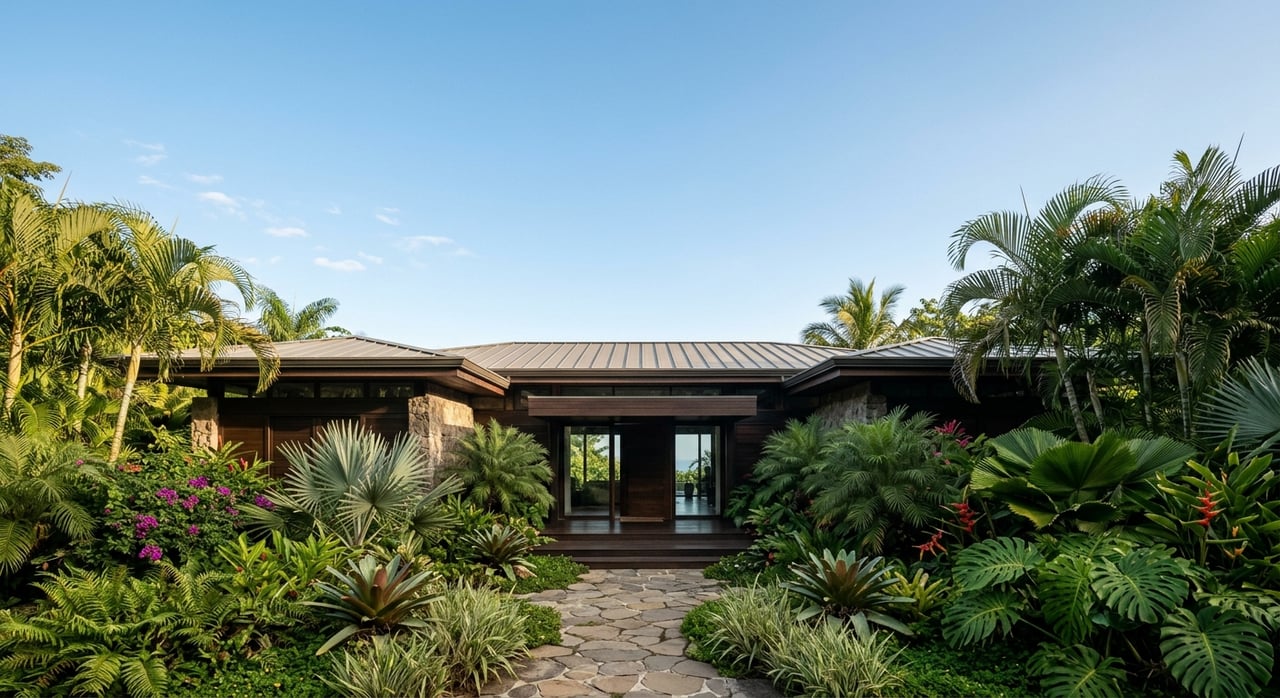
Choosing between North Shore Kauaʻi and Windward Oʻahu for a second home is not just about picking a beautiful place. Both offer scenery, coastline, and a strong sense of Hawaiʻi, but they support very different ownership experiences. If you are trying to decide which one fits your lifestyle, travel habits, and long-term goals, this guide will help you compare the day-to-day reality of each. Let’s dive in.
Two Beautiful Places, Two Different Feelings
North Shore Kauaʻi and Windward Oʻahu can both feel peaceful and scenic, but their overall character is not the same.
On Kauaʻi, county planning documents describe the North Shore as primarily rural and agricultural, with resort use and more urban development concentrated in Princeville. Hanalei is described as a small, peaceful town with taro fields, art galleries, and a one-lane bridge at its entrance, which helps explain why the area feels so distinct and tucked away. You can see that framing in Kauaʻi County planning materials.
Windward Oʻahu has a different rhythm. GoHawaii’s Windward Coast overview describes the area as slower paced, with deep valleys, waterfalls, and beaches, while Kailua is presented as a lively community with shopping, merchants, and recurring community events. In practice, that often feels more neighborhood-oriented than retreat-oriented.
North Shore Kauaʻi Lifestyle
If you picture your second home as a place to slow down, disconnect, and settle into longer stays, North Shore Kauaʻi may feel like the stronger match.
County documents note that the Hanalei-Hāʻena area is shaped by narrow rural roads, bike paths, and one-lane bridges that contribute to a relaxed pace of life and a sense of neighborliness. The same planning materials also point to limited growth north of Hanalei Bridge because of infrastructure constraints, reinforcing the area’s quieter and more secluded feel. That context comes from the Kauaʻi General Plan materials.
For many second-home buyers, that translates to a more immersive experience. You are not just buying a place to drop your bags for a few days. You are often choosing a setting that supports slower mornings, longer visits, and a stronger sense of separation from everyday routines.
Windward Oʻahu Lifestyle
Windward Oʻahu, especially Kailua and Kāneʻohe, tends to work better if you want a second home that feels easy to use often.
Kailua has a compact commercial district and recurring community programming, including farmers markets and the annual Kailua town party. Kāneʻohe’s town core also includes retail and service businesses, which supports a more convenient day-to-day routine. Based on the land use and town patterns described in state environmental review documents, Windward Oʻahu often feels more like a practical home base for repeated visits.
If you want to arrive, settle in quickly, run errands easily, and keep your stay simple, Windward ownership may feel more straightforward. That ease can matter a lot if your second home will be used for shorter but more frequent trips.
Comparing Property Types
The type of home you are likely to find is another major difference between these two areas.
Princeville and North Shore Kauaʻi Inventory
On Kauaʻi’s North Shore, Princeville is the dominant planned community. According to the Kauaʻi General Plan, Princeville includes a shopping center, library, shuttle service, bike and pedestrian paths, and a mix of single-family homes, condominium apartments, and hotel and resort uses.
The same documents note that about 65 percent of Princeville’s existing multi-family units are used as visitor accommodations, with the rest owner-occupied. That helps explain why parts of the North Shore housing stock can feel more resort-oriented, especially if you are exploring condos or attached properties.
Outside Princeville, the North Shore remains intentionally low-density. County planning materials describe Kīlauea as a desirable residential community and reinforce that the broader North Shore is meant to remain primarily rural and agricultural.
Kailua and Kāneʻohe Inventory
Windward Oʻahu presents a different housing profile. Environmental review documents describe Kailua as primarily residential, with a centralized commercial district and mostly single-family homes. A separate review describes Kāneʻohe as mostly residential, low-rise, low-density, and made up mainly of single-family homes, with neighborhood-serving commercial businesses.
Those same sources also show that townhouse-style housing exists in some planned pockets. Overall, the Windward side tends to offer more everyday-home inventory, especially if your goal is a single-family property that feels rooted in a residential neighborhood setting rather than a resort environment.
Travel and Access Matter
For a second home, convenience is not a small detail. It often shapes how often you actually use the property.
Kauaʻi is served by Līhuʻe Airport, and GoHawaii’s Kauaʻi travel FAQ notes that Princeville is about an hour from the airport. Even with direct flights to Kauaʻi, that means a North Shore property usually comes with a longer ground transfer after arrival.
Windward Oʻahu benefits from being on the same island as Daniel K. Inouye International Airport, the state’s largest airport. For buyers who plan to come and go often, that can make ownership feel easier and more flexible.
Services and Everyday Convenience
The daily support system around your home can shape your ownership experience just as much as the home itself.
On the Windward side, services are more concentrated. A State of Hawaiʻi news release notes that Kāneʻohe Civic Center houses important social services for Windward residents, Windward Mall hosts a farmers market, and Adventist Health Castle in Kailua is the primary medical facility serving Windward Oʻahu.
On Kauaʻi’s North Shore, Princeville serves as a key service hub, while Hanalei relies in part on a visitor center and shuttle system to manage access to nearby attractions. That setup fits the area’s smaller-scale, lower-density pattern, but it may feel less turnkey if you want immediate access to a wider range of everyday services.
Which One Fits Your Second-Home Goals?
The best choice depends less on which place is more beautiful and more on how you want to use your home.
Choose North Shore Kauaʻi If You Want:
- A quieter, more immersive retreat
- A more rural and low-density setting
- Longer stays instead of quick trips
- Resort-style inventory, especially in Princeville
- A stronger sense of separation from city routines
Choose Windward Oʻahu If You Want:
- A second home that feels easier to use often
- Simpler airport access on the same island as the main air gateway
- More everyday services nearby
- A neighborhood-oriented setting in places like Kailua or Kāneʻohe
- More single-family residential options in established communities
A Practical Way to Decide
If you are still weighing both options, ask yourself one simple question: Will this home be a retreat, or will it be part of your regular rhythm?
If you want a place that encourages you to unplug and stay awhile, North Shore Kauaʻi offers a setting that is hard to duplicate. If you want a second home that is easier to reach, easier to manage, and easier to enjoy on repeat visits, Windward Oʻahu is likely the more practical fit.
For buyers focused on Windward Oʻahu, especially Kailua, Lanikai, and nearby coastal neighborhoods, working with a local advisor can help you compare listed opportunities with the kinds of off-market options that do not always reach the broader market. If you are considering a second home on Oʻahu’s Windward side, Kalei Wodehouse offers high-touch local guidance tailored to your goals.
FAQs
Is North Shore Kauaʻi or Windward Oʻahu better for frequent second-home visits?
- Windward Oʻahu is often the more practical fit for frequent visits because it is on the same island as Daniel K. Inouye International Airport and has more concentrated everyday services.
Does North Shore Kauaʻi have more resort-style second-home inventory?
- Yes. Princeville is the North Shore’s main planned community and includes a mix of single-family homes, condominium apartments, and hotel and resort uses, with many multi-family units used as visitor accommodations.
Which area feels more secluded for a second home in Hawaiʻi?
- North Shore Kauaʻi generally feels more secluded because of its rural road network, one-lane bridges, and limited growth north of Hanalei Bridge.
Which area feels more like a residential neighborhood for a second home?
- Windward Oʻahu, especially Kailua and Kāneʻohe, tends to feel more neighborhood-like because of its primarily residential land use and centralized commercial and service areas.
Is airport access easier for a second home on Windward Oʻahu?
- Yes. Windward Oʻahu is on the same island as the state’s largest airport, while North Shore Kauaʻi properties such as Princeville are about an hour from Līhuʻe Airport.
What kind of homes are more common on Windward Oʻahu?
- Windward Oʻahu is largely made up of residential, low-rise neighborhoods with mostly single-family homes, along with some townhouse-style housing in planned pockets.