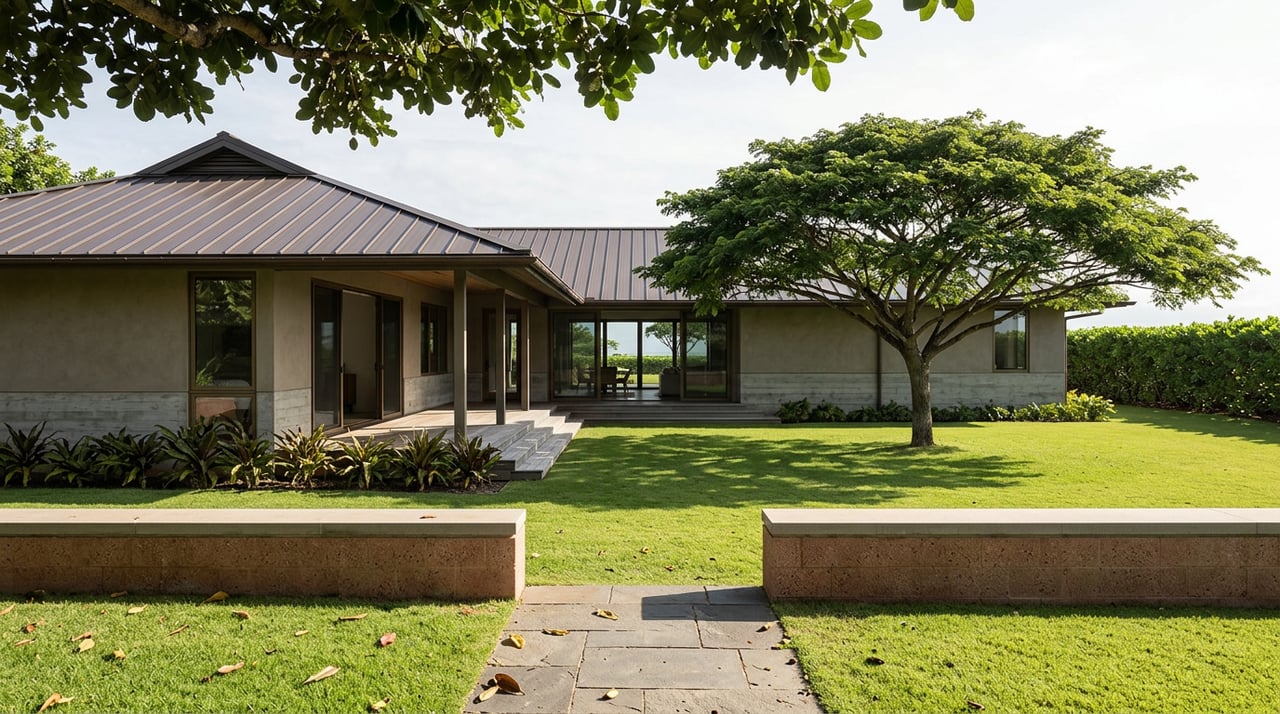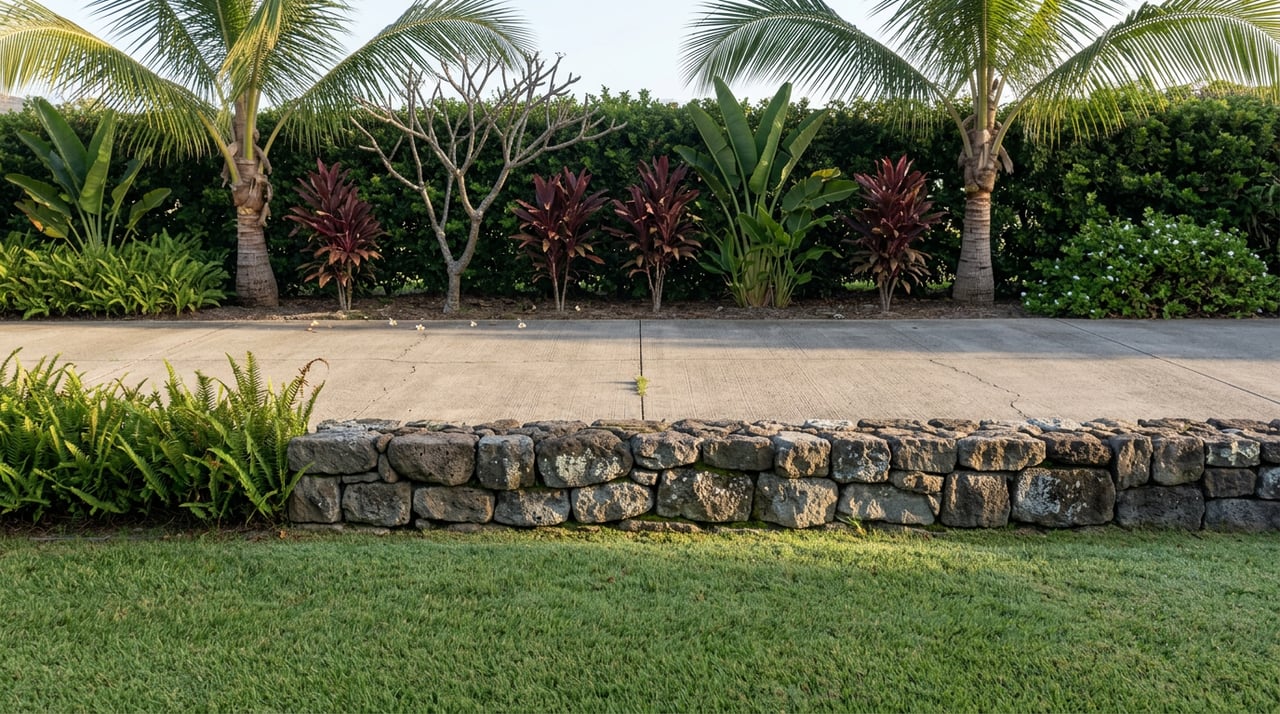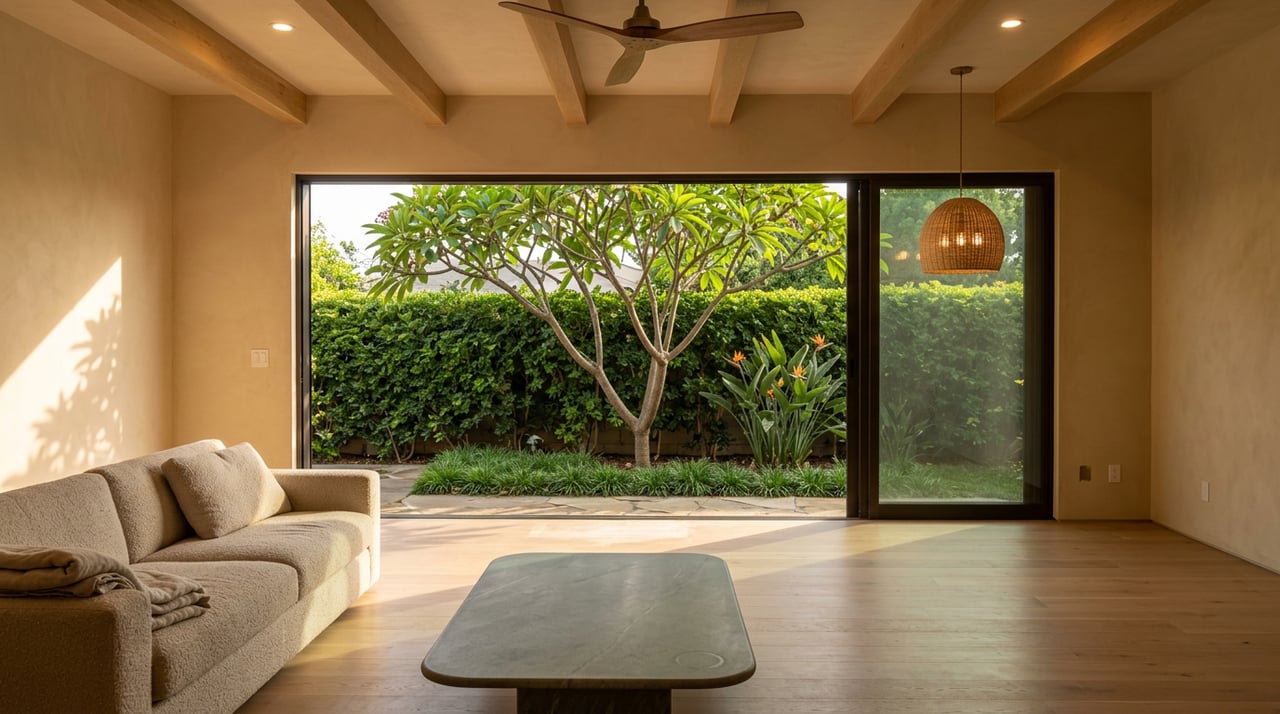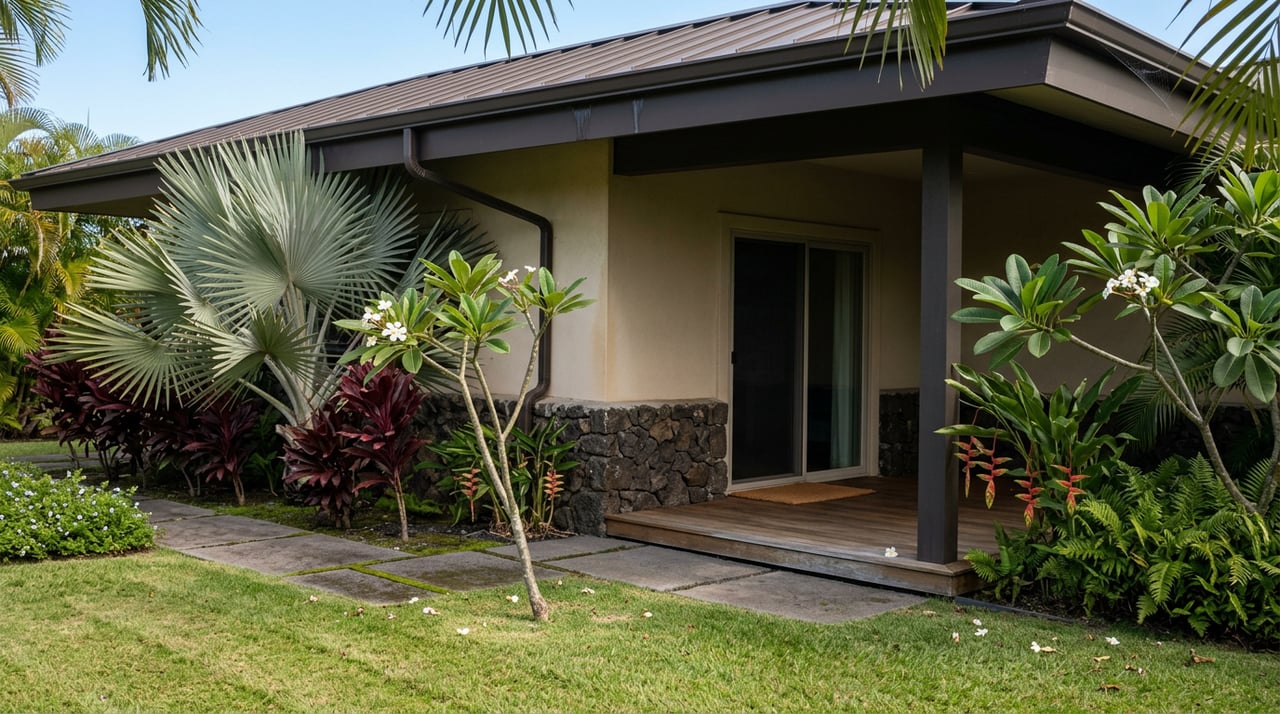
Search "Waimanalo home prices" this month and you'll get answers that don't agree with each other by more than a million dollars. One aggregator's trailing window puts the median at $765,000. Homes.com's own figures for July 2026 put it at $1.91 million. Movoto's July 2026 figures show $2.79 million. None of these numbers are wrong. They're just measuring different things and calling it the same market.
That's the story worth telling here, because most buyers comparing Waimanalo to Kailua or Lanikai on price are doing math on a number that can't actually hold the weight they're putting on it. Waimanalo isn't one housing market wearing a zip code. It's four of them, stapled together by a highway.
Four Markets, One Name
Drive Kalaniana'ole Highway through Waimanalo and you pass all four without noticing the seams. Near the sand, in the Waimanalo Beach Lots subdivision, you get fee-simple oceanfront parcels where anyone can buy, full stop. Mauka, toward the base of the Koolau range, you hit agricultural land, some of it fee simple, some of it held under state agricultural leases with their own resale and financing rules. Scattered through both zones sits Hawaiian Home Lands, leasehold parcels administered by the Department of Hawaiian Home Lands and restricted to buyers who are at least 50 percent Native Hawaiian by blood, under 99-year leases that run for a dollar a year. And tucked among all of it are the legacy plantation-era cottages and multi-generational family lots that predate most of the subdivision lines entirely, like the five-unit property beneath Mount Olomana that listed this year at $1,899,000 for what its own listing called "multi-generational living."
Four legal regimes. Four buyer pools. One aggregated "median" that portals report as if it describes a single coherent product.
Here's the detail that should stop you: the single highest-priced listing in Waimanalo this year wasn't the oceanfront. It was a Hawaiian Home Lands parcel on Kalaniana'ole Highway, listed at $24,900,000, restricted to Native Hawaiian buyers who qualify by blood quantum. A leasehold product that most buyers assume trades at a discount to fee simple was, at least in this one listing, the ceiling of the entire market. Acreage set that price, not sand and not tenure type. It's a reminder that in a market this small, one unusual parcel does more to shape the headline number than any trend line does.
Why One Listing Can Move the Median a Million Dollars
Homes.com's own figures for July 2026 show why. Nine single-family listings, active at once, ranging from $380,000 to that same $24.9 million outlier. The median list price for the month came out to $1,912,000, while the average sale price ran higher, at $2,312,727. Movoto's July 2026 numbers, pulled from the same window, put the median list price at $2.79 million with a per-square-foot figure of $1,420. A trailing 90-day window on another aggregator puts the median closer to $765,000, on a sample small enough that a single closed sale moves the percentage meaningfully.
None of these figures are fabricated. They're measuring different slices of the same nine-to-twenty-listing pool, some counting list price, some counting closed sales, some drawing the boundary around "Waimanalo" and some drawing it around "Waimanalo Beach" as a separate submarket entirely. Redfin's own site illustrates that split directly under two different tags: as of January 2025, its "Waimanalo" city page put the median at $940,000, while its separate "Waimanalo Beach" page reported a median of $3.1 million as of August 2024. Those two snapshots are more than a year old now and well behind the July 2026 figures above, but the naming split itself hasn't gone away. Some portals still track "Waimanalo" and "Waimanalo Beach" as separate submarkets with their own separate medians, and that alone can explain a seven-figure gap between two sites checked on the same afternoon.
When your entire dataset for a month is nine or ten homes, one $6.998 million estate closing or one modest $749,000 fixer coming off the books doesn't nudge the median. It relocates it. That's not volatility in the way Kailua's market experiences volatility, where hundreds of transactions smooth out the noise. It's structural instability, built into a market too thin and too legally fragmented to average cleanly.
What This Means When You're Comparing Neighborhoods
If you're cross-shopping Waimanalo against Kailua or Lanikai using median price as your yardstick, you're comparing a number built on a few hundred monthly transactions against one built on single digits, and pretending they carry the same statistical weight. They don't.
The more useful question isn't "what's the median in Waimanalo," it's "which of the four Waimanalos am I actually looking at, and what does that listing's land tenure allow me to do." A fee-simple lot in the Waimanalo Beach Lots subdivision behaves like real estate anywhere else on the Windward side. An agricultural leasehold parcel carries its own financing and resale rules that a standard fee-simple mortgage doesn't anticipate. A Hawaiian Home Lands parcel isn't available to you at all unless you meet the ancestry requirement, no matter how attractive the price looks. Land tenure, not square footage or proximity to the water, is often the variable that actually determines what a listing is worth to you specifically.
This is also why a listing that looks 30 or 40 percent cheaper than its neighbors deserves a second look before it deserves excitement. In a market where DHHL leasehold, state ag leasehold, and fee simple all sit within a few blocks of each other, "too good to be true" is frequently just "not the tenure you assumed."
None of this changes what makes Waimanalo worth considering. It's still a place with a working agricultural heritage, farm stands along the highway selling produce, local staples like Keneke's and Sweet Home Waimanalo, the Waimanalo Polo Field, and a stretch of coastline that includes some of the most photographed sand on the island near Sea Life Park and Bellows Field Beach Park. What it changes is how you should read a listing sheet before you get attached to a number.
Before You Write an Offer
If a Waimanalo listing catches your eye, ask your agent to confirm the land tenure in writing and match it against the tax map key before you go any further. Fee simple, state agricultural leasehold, and Hawaiian Home Lands each carry different financing paths, different resale pools, and in the case of DHHL, a hard eligibility line that no amount of enthusiasm changes.
Frequently Asked Questions
Can a non-Hawaiian buyer purchase a home on Hawaiian Home Lands? No. DHHL leasehold parcels are restricted to lessees who meet the federal blood quantum requirement of at least 50 percent Native Hawaiian ancestry, verified through documentation submitted to DHHL. The lease itself typically runs 99 years at a nominal annual rent, but eligibility to hold that lease doesn't transfer to a general buyer the way fee-simple title does.
Do "Waimanalo" and "Waimanalo Beach" mean the same market on real estate sites? Not always. Some data providers track them as one combined area. Others, including Redfin's own city pages, split them into separate submarkets with materially different reported medians. If you're comparing numbers across sites, check which geography each one is actually drawing before you treat the figures as comparable.
What should I check first if a Waimanalo listing looks unusually affordable? Land tenure. Confirm whether the parcel is fee simple, a state agricultural lease, or Hawaiian Home Lands leasehold, and have that confirmed in writing against the tax map key rather than assumed from the listing description alone.
Waimanalo rewards buyers who ask the right question before they fall for the right number. If you're trying to figure out which slice of this market actually fits what you're looking for, and how it stacks up against Kailua, Lanikai, or the rest of the Windward coast, Kalei Wodehouse can walk the tax map with you before you ever write an offer.